
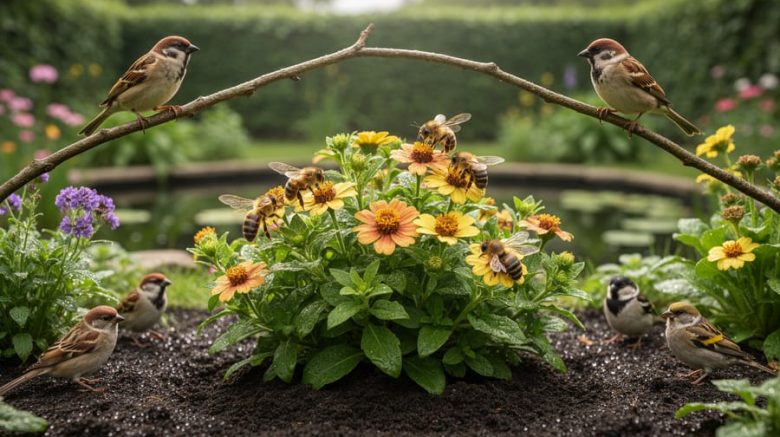
In environmental science, a community is all the different populations of living organisms that share the same space and interact with one another at a particular time. Think of it as the complete cast of characters in a specific natural setting: every plant, animal, fungus, and microorganism living together in your backyard, a pond, or a stretch of forest.
Understanding ecological communities matters because it reveals how nature actually works. When you notice fewer bees in your garden or watch invasive plants take over a local park, you’re witnessing community dynamics in action. These interactions determine which species thrive, which struggle, and how resilient an ecosystem becomes when faced with challenges like climate change or pollution.
The concept isn’t just academic. Recognizing your local community of organisms helps you make smarter environmental choices. Planting native flowers supports the specific pollinators adapted to your region. Removing one invasive species can create space for dozens of native plants and animals to return. Community managers and homeowners who grasp these connections can restore degraded habitats, protect water quality, and build landscapes that support biodiversity rather than diminish it.
This article breaks down what makes an ecological community, explores how different species interact within these living networks, and shows you practical ways to apply this knowledge. Whether you’re managing a community garden, restoring a stream bank, or simply curious about the wildlife around your home, understanding ecological communities gives you the foundation to take meaningful environmental action.
What an Environmental Community Really Means
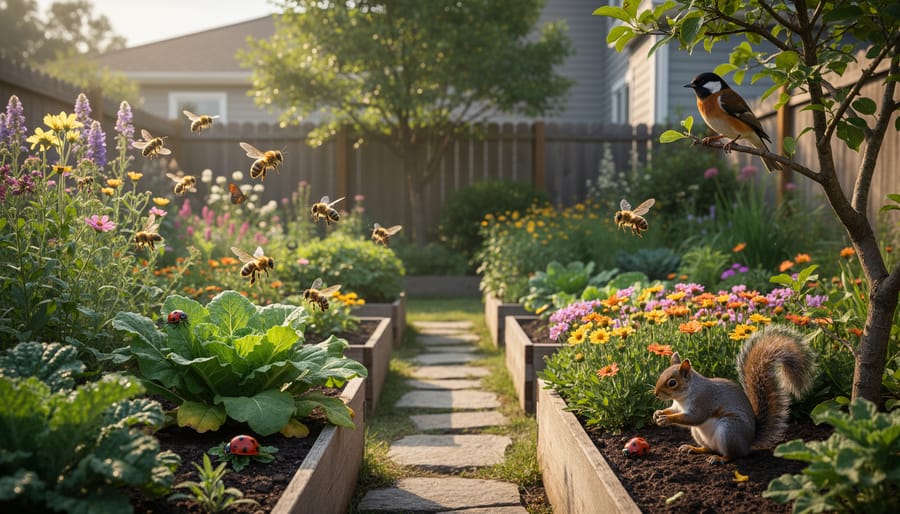
In environmental science, a community is all the different species living and interacting in the same place at the same time. Think of it as the full cast of characters in a specific location, from the tiniest soil bacteria to the largest trees or animals. Unlike a population (which refers to one species), a community includes every organism sharing that space.
The key word here is “different.” Your backyard isn’t just a collection of individual robins or dandelions. It’s a community made up of birds, insects, worms, grasses, flowers, fungi, and countless microorganisms all occupying the same ground. What makes it a community rather than a random assortment is that these species don’t just coexist, they interact. The robin eats the worm, the dandelion feeds the bee, the fungi break down dead leaves that nourish the grass.
Let’s break down what defines a community:
- Community
- All the different species living together in a specific area and interacting with one another, like all the organisms in a city park.
- Population
- A group of the same species in one area, such as all the squirrels in that park.
- Ecosystem
- A community plus its physical environment, the living organisms and the non-living elements like water, soil, and sunlight that support them.
- Habitat
- The physical place where an organism lives, which might be shared by many species that together form a community.
- Species Interactions
- The relationships between different organisms in a community, such as pollination, predation, or competition for resources.
Understanding these distinctions helps clarify what scientists mean when they study populations in the same habitat and how they form communities. A local pond, for example, contains distinct populations, the bass population, the cattail population, the dragonfly population, but together they form the pond community. Add in the water, rocks, and nutrients, and you’ve got the pond ecosystem.
The beauty of this concept is its universality. Communities exist everywhere: a forest, a coral reef, a rotting log, even the cracks in a sidewalk. Each supports its own unique mix of species working together, competing, and shaping each other’s lives.
How Environmental Communities Work
The Web of Species Interactions
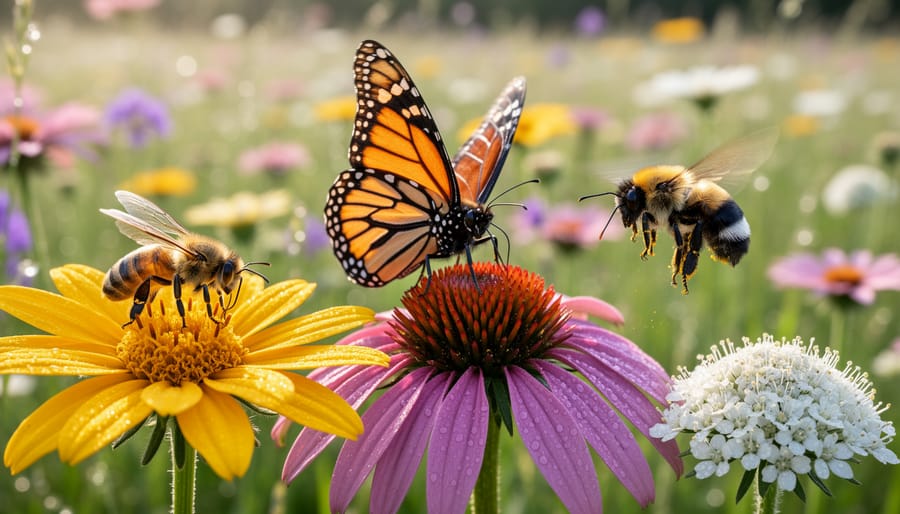
Species don’t just live side by side, they’re constantly interacting, and these relationships shape everything from who survives to who thrives. Understanding these connections helps you see your backyard or local park as the living network it truly is.
Competition happens when species need the same limited resources. Two bird species might compete for the same nesting spots, or different plants might race for sunlight and water in your garden. You’ll notice taller plants often shade out shorter ones, or dominant birds chase others away from feeders.
Predation is straightforward: one organism hunts and eats another. Hawks catching mice, spiders trapping insects, or even ladybugs devouring aphids on your roses all fall into this category. These relationships control population sizes naturally.
Mutualism benefits both partners. Bees pollinating flowers while collecting nectar is the classic example you can watch in real time. The bee gets food, the plant reproduces, both win. Nitrogen-fixing bacteria living in clover roots work the same way.
Commensalism helps one species without affecting the other much. Birds nesting in trees get shelter while the tree remains largely unbothered. Barnacles hitching rides on whales gain transportation without harming their host.
These types of species interactions overlap and shift constantly, creating the complex web that keeps communities functioning.
What Holds a Community Together
Every environmental community relies on a few critical elements to stay balanced and functional. Think of these as the foundation and framework that keeps the whole structure standing.
Keystone species play an outsized role in holding communities together. Remove one keystone species, and the entire community can collapse. Sea otters in kelp forests are a classic example: they eat sea urchins, which would otherwise devour the kelp. Without otters, the kelp disappears, and so do the hundreds of species that depend on it for food and shelter. You might find similar keystone players in your area, maybe it’s beavers creating wetlands or specific native plants that dozens of insects rely on.
Energy sources anchor the community. In most cases, that’s sunlight driving photosynthesis in plants and algae. These primary producers capture energy and make it available to everything else up the food chain. Without them, the entire web unravels.
The physical environment sets the rules. Temperature, water availability, soil type, and shelter determine which species can live there and how they interact. A community in a shaded forest floor operates completely differently from one in an open meadow, even if they’re just meters apart. Change these physical conditions, through drought, pollution, or development, and the community’s structure shifts, sometimes dramatically.
Different Types of Environmental Communities
Communities aren’t confined to pristine wilderness or remote jungles. They exist everywhere, from ancient forests to your neighborhood park, each shaped by the physical environment and the species that call it home.
Terrestrial communities develop on land and vary dramatically based on climate, soil, and geography. Forest communities thrive where rainfall and temperature support tree growth, hosting everything from fungi in the soil to birds in the canopy. Grassland communities dominate areas with less rainfall, where grasses, grazing animals, and burrowing creatures create intricate networks of interaction. Desert communities prove that life persists even in harsh conditions, with specialized plants like cacti, nocturnal animals, and organisms adapted to extreme temperature swings and scarce water.
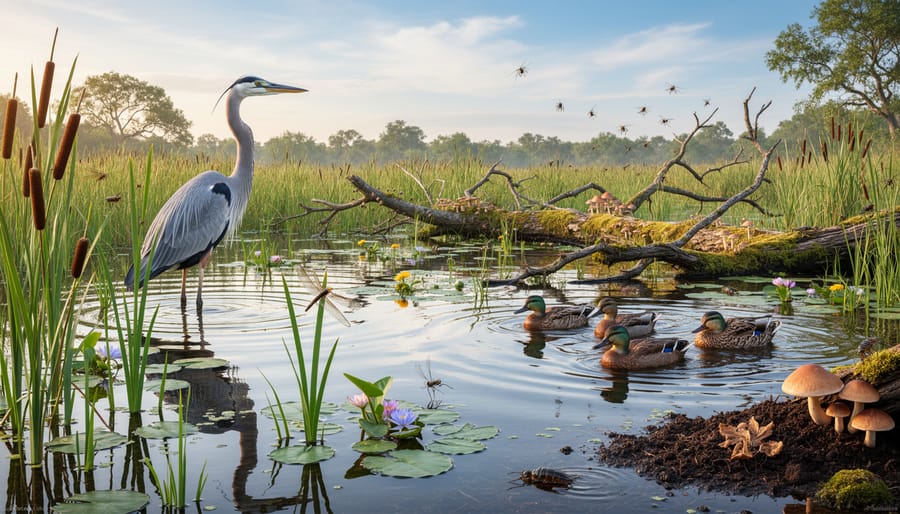
Aquatic communities function in water environments and face entirely different challenges than their land-based counterparts. Freshwater communities in rivers, lakes, and streams support fish, aquatic insects, algae, and amphibians, all adapted to moving or still water with varying oxygen levels. Marine communities in oceans harbor an astounding diversity, from microscopic plankton to whales, with coral reefs alone supporting thousands of species in a single location. Wetland communities occupy the transition zone between land and water, creating some of Earth’s most productive ecosystems where plants, fish, birds, and invertebrates thrive in seasonal flooding cycles.
Here are some common community types you might encounter:
- Forest communities: dense vegetation with layered canopy, understory, and forest floor interactions
- Grassland communities: dominated by grasses with grazing mammals, ground-nesting birds, and extensive root systems
- Freshwater communities: rivers and lakes with fish, aquatic plants, insects, and microorganisms adapted to low-salt conditions
- Coastal communities: tide pools and shorelines where species tolerate changing water levels and salinity
- Urban communities: cities and suburbs with pigeons, squirrels, street trees, and species that have adapted to human-modified landscapes
Urban communities deserve special attention because they’re where most of us live and have the most direct influence. Cities contain surprising biodiversity: hawks nesting on skyscrapers, pollinators visiting rooftop gardens, and entire ecosystems in parks and green spaces. Recognizing these communities helps us see that environmental science isn’t just about faraway places, it’s happening right outside your door.
Why Understanding Communities Matters for Environmental Change
Grasping what a community is in environmental science isn’t just academic, it’s the foundation for smarter, more effective environmental action in your own neighborhood. When you understand that your backyard, local creek, or city park hosts a web of interconnected species, you start to see how every choice you make ripples through that living network.
Recognizing your local community helps you spot trouble early. A sudden drop in bees signals pollination problems ahead. Algae blooms in a pond point to nutrient runoff from lawns or roads. Invasive plants crowding out native species reveal an imbalance that will cascade through the food web. Once you know what a healthy community looks like, you can track changes and respond before small issues become ecological disasters.
This knowledge also sharpens your conservation decisions. Instead of planting whatever looks pretty, you choose native species that support local pollinators, birds, and beneficial insects. You understand why leaving leaf litter and dead wood matters, they’re habitat and food for decomposers that cycle nutrients back into the soil. You realize that spraying pesticides doesn’t just kill mosquitoes; it eliminates predators, pollinators, and the organisms that keep your soil alive.
Human activities constantly reshape community structure, often without us noticing. Clearing vegetation fragments wildlife corridors. Stormwater runoff alters stream chemistry. Light pollution disrupts nocturnal species. But awareness flips the script. When you see your actions through a community lens, reducing waste becomes about protecting the species affected by landfill runoff. Supporting mitigation strategies means preserving the climate conditions communities need to thrive. Understanding how mitigation works shows you the direct connection between energy choices and ecosystem health.
The payoff is real. Healthier communities mean cleaner water, richer soil, natural pest control, and greater resilience to droughts and floods. You’re not just helping nature, you’re investing in the living systems that sustain your own quality of life.
How to Support Healthy Communities Where You Live
You have more power than you think when it comes to protecting the environmental communities in your backyard, neighborhood, or local park. Every action you take shapes the health and resilience of the species living around you. Start by observing what already exists: which birds visit your yard, what insects you see, which plants thrive without help. This awareness helps you make choices that support rather than disrupt the natural interactions happening right outside your door.
The most effective steps focus on creating conditions where native species can thrive and interact naturally:
- Plant native flowers, shrubs, and trees that provide food and shelter for local wildlife throughout the year
- Eliminate or drastically reduce pesticides and herbicides that harm beneficial insects, pollinators, and soil organisms
- Provide clean water sources like birdbaths or small ponds for drinking and bathing
- Leave some areas of your yard a little wild with leaf litter, brush piles, or unmowed patches for habitat
- Join local conservation efforts, citizen science projects, or native plant societies to learn and contribute
- Reduce waste, especially plastics, and keep chemicals out of storm drains that flow to nearby waterways
These actions work because they strengthen the web of relationships that holds communities together. Native plants support native insects, which feed birds and small mammals, which in turn support predators. When you skip the lawn chemicals, you protect the soil microbes and earthworms that keep nutrient cycles running. Even small yards make a difference when neighbors create connected patches of habitat, forming wildlife corridors that allow species to move, feed, and reproduce. You don’t need a large property or special expertise to start. Pick one or two actions that fit your situation, observe the results, and build from there.
Common Questions About Environmental Communities
What’s the difference between a community and an ecosystem?
A community is just the living organisms in an area, all the plants, animals, fungi, and microbes interacting with each other. An ecosystem includes those same organisms plus all the non-living elements like soil, water, sunlight, and air that they depend on.
How do communities change over time?
Communities naturally shift through a process called succession, where pioneer species colonize an area first, then are gradually replaced by different species as conditions change. This can happen after disturbances like fires or floods, or even just as soil develops and trees grow.
Can humans be part of environmental communities?
Yes, humans are absolutely part of environmental communities. We interact with countless species daily, eating plants and animals, sharing spaces with urban wildlife, affecting pollinators through our gardens, making us active members who significantly influence community health.
How does climate change affect communities?
Rising temperatures and shifting precipitation patterns force species to migrate, alter their behavior, or face extinction. Communities that evolved together over centuries can fragment as some species move while others stay put, and threats like climate change irreversibility mean some shifts may become permanent.
What happens when a species disappears from a community?
The impact depends on the species’ role. Losing a keystone species can cause cascading changes throughout the community, while losing a redundant species might have minimal effect. Either way, it disrupts established relationships and can weaken the community’s resilience to future stresses.
Are cities considered environmental communities?
Absolutely. Urban areas host diverse communities of adapted species, pigeons, squirrels, street trees, insects, and countless microbes, all interacting in ways similar to wilderness communities, just with more human influence and often non-native species mixed in.
These questions highlight how communities are dynamic systems shaped by both natural processes and human choices. Understanding these patterns helps you recognize when your local community is thriving versus when it needs support through habitat restoration or protection efforts.
Understanding what a community means in environmental science, a group of different species living and interacting in the same place, gives you a powerful lens for seeing the natural world differently. These communities aren’t just in rainforests or coral reefs. They’re in your backyard, your neighborhood park, the trees lining your street, even in the cracks of sidewalks where weeds push through.
Every time you notice a bee visiting flowers, birds nesting in a tree, or squirrels gathering acorns, you’re witnessing a community in action. These everyday interactions matter just as much as what happens in wilderness areas.
The encouraging truth is that your choices directly affect the health of these communities. When you plant native flowers, reduce pesticides, or create small habitat spaces, you’re strengthening the web of life right where you are. You’re helping pollinators find food, giving birds shelter, and supporting the countless unseen organisms that keep ecosystems functioning.
You don’t need to be a scientist or travel to remote locations to make a difference. Start by observing the community around you, learning which species call it home, and taking small steps to protect them. Your actions ripple outward, contributing to healthier, more resilient communities that benefit everyone.