
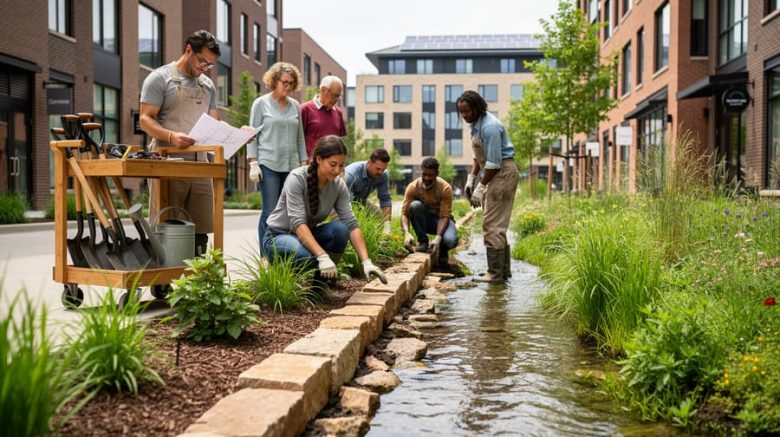
Communities around the world are transforming their neighborhoods through collective action on sustainability, turning everyday spaces like parking lots into rain gardens, converting vacant buildings into renewable energy hubs, and reducing local emissions by 20 to 50 percent within just a few years. These changes happen when neighbors, local organizations, and small businesses collaborate on concrete projects rather than waiting for top-down solutions.
Understanding what is a community in environmental terms helps explain why local-scale action works so effectively. Shared geography, resources, and relationships create natural accountability. When one household installs solar panels, three more typically follow within 18 months. When a school launches a composting program, nearby families start their own backyard bins.
The momentum stems from visibility and trust. People see their neighbor biking to work and think, “I could do that too.” They attend a community meeting about pollinator gardens and leave with free native seeds and a new friend who shares gardening tips. These personal connections drive faster behavior change than any public service announcement.
Real transformation requires more than individual goodwill, though. Successful communities pair grassroots enthusiasm with structured support through neighborhood green teams, shared tool libraries, bulk purchasing programs, and local policy advocacy. They celebrate small wins, measure progress transparently, and adapt strategies based on what actually moves the needle. The result is measurable environmental improvement that residents can see, touch, and take pride in.
The Shift from Isolated Efforts to Collective Action
When you switch from a traditional lightbulb to an LED, you save maybe $75 a year on electricity. That’s good. But when your entire apartment building coordinates the same switch, negotiates a bulk purchase, and shares installation tips, suddenly you’re looking at collective savings that can fund a solar panel project. That’s the fundamental difference between isolated environmental efforts and community-driven change.
For years, we’ve shouldered the responsibility of planetary health as individuals. We’ve dutifully sorted our recycling bins, shortened our showers, and felt guilty about that one plastic straw. But the truth is, individual action alone struggles against systemic problems. Your reusable bag makes almost no dent in plastic pollution when the grocery store still wraps half its produce in film. Your composting effort diverts perhaps 200 pounds of waste annually while the city sends 50,000 tons to landfills.
This doesn’t mean individual actions are pointless, but they hit a ceiling quickly. You can only optimize your own household so far before you need infrastructure, policy changes, and collective bargaining power that individuals simply don’t have.
Communities, by contrast, operate at a scale where real systems can shift. When twenty families on a street agree to share lawn equipment, they don’t just reduce emissions from fifteen unused mowers sitting in garages. They create a borrowing culture that spreads to other tools, other streets, other resources. When a neighborhood pushes for bike lanes together, the city listens in ways it never would to a lone voice.
The shift happens when people realize they’re not alone in wanting change. That colleague who bikes to work? She knows the safe routes. That neighbor composting in his backyard? He’s learned what works in your local climate. Communities pool knowledge, split costs, and provide the social reinforcement that keeps people committed when motivation dips. You’re far less likely to quit composting when your block shares a system and everyone sees who’s participating.
This evolution from solo efforts to coordinated action represents perhaps the most promising development in grassroots environmentalism. Communities sit at the perfect scale: small enough for personal connection and accountability, large enough for meaningful impact and political leverage.
Real Changes Happening in Communities Right Now
Neighborhood-Level Transformations
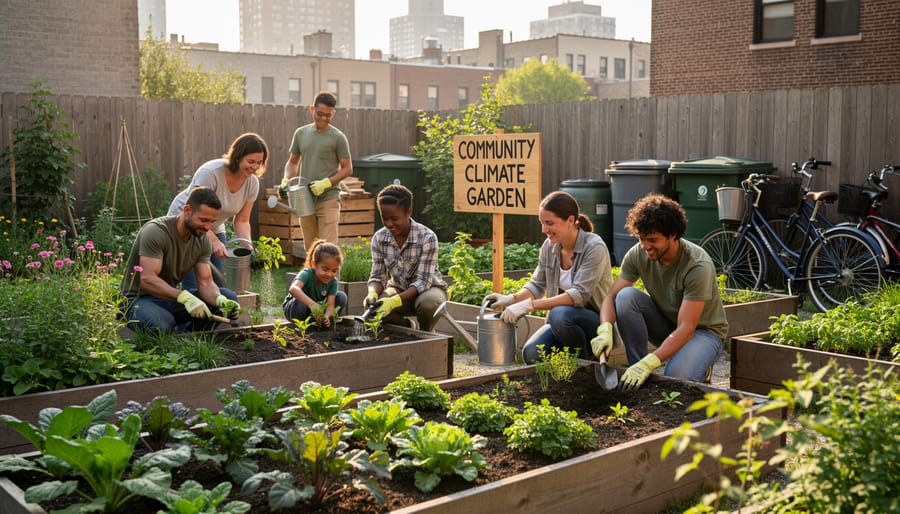
Small neighborhoods are proving that you don’t need city-wide mandates or massive budgets to create meaningful environmental change. Across the country, groups of a dozen to a hundred households are launching initiatives that reduce waste, save money, and strengthen community bonds while benefiting the planet.
Community gardens have evolved beyond simple vegetable plots. The Bancroft neighborhood in Minneapolis transformed three vacant lots into thriving garden spaces that now produce over 2,000 pounds of food annually while reducing lawn maintenance emissions and creating habitat for pollinators. Neighbors share seeds, tools, and knowledge, with experienced gardeners mentoring newcomers through each growing season.
Tool-sharing libraries are eliminating duplicate purchases that often sit unused. A Portland neighborhood established a sharing system for lawn equipment, power tools, and party supplies that serves 85 families. Each household pays $25 annually and can borrow items for free, reducing the collective carbon footprint from manufacturing while saving members an estimated $400 per year in avoided purchases.
Composting programs demonstrate how backyard composting reduces waste when neighbors coordinate their efforts. The key innovations happening at the neighborhood level include:
- Shared composting sites where 10-15 households contribute food scraps, reducing individual maintenance while creating enough volume for hot composting
- Rotating “compost champion” roles so expertise spreads and no single person bears the full responsibility
- Finished compost distribution systems that give participants rich soil for gardens, closing the loop from waste to food production
- Educational workshops that help newcomers learn proper composting techniques in a low-pressure setting
Renewable energy cooperatives let neighborhoods pool resources for solar installations that would be unaffordable individually. A Denver subdivision negotiated bulk pricing for rooftop solar across 40 homes, cutting installation costs by 30 percent while creating enough collective capacity to power the neighborhood pool and clubhouse with clean energy.
These transformations share common elements: they start small, focus on one specific change, and create visible results that attract more participants organically.
City-Wide Environmental Movements
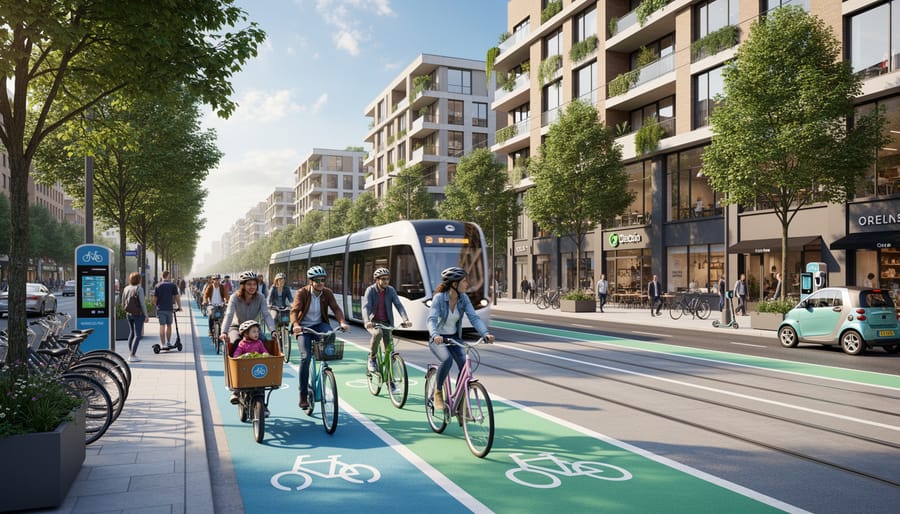
When cities embrace environmental transformation, they create change that touches every resident’s daily life. Urban centers worldwide are implementing ambitious programs that reduce waste, expand green transportation, and bring nature back into concrete landscapes.
Take municipal waste reduction programs that move beyond basic recycling. Cities like San Francisco have achieved 80% waste diversion through comprehensive composting requirements for all residents and businesses. These aren’t just suggestions, they’re supported by infrastructure like curbside organic waste pickup and neighborhood drop-off centers. When cities provide the systems, participation soars because the right choice becomes the easy choice.
Public transportation improvements create immediate environmental wins while transforming how communities function. Cities expanding metro lines, adding electric bus fleets, and creating protected bike lanes see measurable drops in car emissions. Barcelona’s “superblock” program reclaims streets from cars, converting them into pedestrian zones with cycling infrastructure. Residents initially skeptical now champion the changes after experiencing quieter streets and cleaner air in their neighborhoods.
Urban tree planting initiatives do more than beautify, trees cool urban heat islands by up to 9 degrees Fahrenheit while absorbing carbon and filtering pollutants. Melbourne’s urban forest strategy aims to increase canopy cover from 22% to 40%, planting thousands of trees annually through community volunteer programs.
Some cities are even exploring innovative energy solutions like floating wind turbines in nearby waters to power municipal buildings and infrastructure.
Community-led climate action plans prove especially powerful because residents shape the priorities. When Portland developed its climate strategy, thousands of community members contributed ideas, ensuring the plan addressed local concerns like affordability alongside emissions reduction.
Digital Communities Creating Physical Change
Online platforms are bridging the digital-physical divide in remarkable ways, turning virtual connections into real-world environmental impact. What starts as a conversation thread often transforms into coordinated action across neighborhoods and cities.
Facebook groups have become unexpected organizing hubs for environmental initiatives. Local “Buy Nothing” groups now operate in thousands of communities, facilitating millions of item exchanges annually that keep usable goods out of landfills. Members post what they can give away or need, creating hyperlocal circular economies where yesterday’s unused items become today’s treasures. These groups succeed because they make sustainable living convenient, you’re not hunting through classified ads but getting alerts when your neighbor offers exactly what you need.
Recycling apps like TerraCycle and Recycle Coach connect users with specialized recycling locations and pickup services that municipal programs miss. People photograph hard-to-recycle items, get disposal guidance, and organize group drop-offs to recycling centers. Some communities have created app-based pickup networks where volunteers collect recyclables from neighbors on their regular routes.
Nextdoor has spawned countless environmental initiatives, from coordinated yard-waste sharing for composting to organized storm drain stenciling projects. Reddit’s local subreddits regularly mobilize cleanup crews for parks and beaches, with participants meeting online but working shoulder-to-shoulder removing trash.
Discord servers now coordinate community solar projects and carpool networks, using real-time chat to solve logistics that once required formal organizations. The digital backbone handles scheduling, communication, and knowledge-sharing while volunteers focus their energy on physical action rather than administrative coordination.
Why Community-Driven Change Works Better
Community-driven environmental efforts consistently outperform isolated individual actions, and the reasons go far beyond simple math. When you understand why communities succeed where solo efforts falter, you can harness these dynamics in your own neighborhood.
Accountability transforms intentions into habits. That weekly neighborhood composting collection happens because your neighbors see your bin at the curb, or notice when it’s missing. Research shows people are 65% more likely to maintain sustainable practices when they’re part of a group tracking progress together. This isn’t peer pressure; it’s the difference between a New Year’s resolution and a commitment you’ve made to people who actually check in with you.
Shared resources eliminate the biggest barriers to action. A single household installing solar panels faces the full financial burden and research load. A community solar cooperative splits costs, shares expertise, and negotiates better rates through bulk purchasing power. Tool libraries mean you don’t need to own every specialized item for home efficiency upgrades. When communities pool resources, sustainability becomes accessible to people who couldn’t afford it alone.
Normalized behavior changes what seems possible. The first person composting on your street is quirky. When ten households do it, it’s a neighborhood practice. When fifty do it, it’s just how things are done here. Communities create new social norms that make sustainable choices feel normal rather than extreme. This cultural shift is what changes mitigation meaning from abstract concept to visible daily practice.
Political leverage multiplies through collective voice. A single resident requesting bike lanes gets filed away. A community group with 200 members and documented need gets a city council meeting. Local governments respond to organized communities because they represent voters, economic activity, and implementable solutions. Communities can advocate for systemic changes, better public transit, municipal composting programs, building code improvements, that individuals simply cannot access.
Communities work because they address motivation, resources, culture, and systems simultaneously. They turn sustainability from an isolated struggle into a shared project with visible momentum.
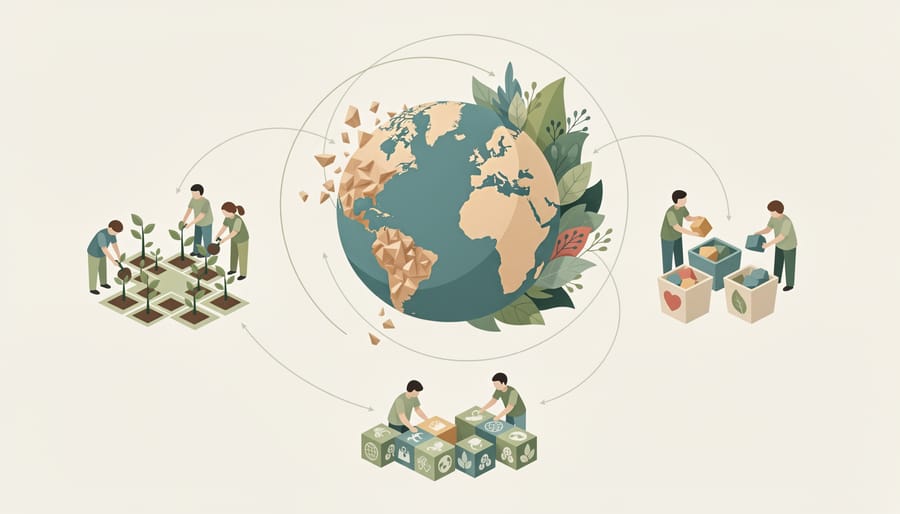
How Your Community Can Start Making Changes
Starting environmental change in your community doesn’t require a formal organization or a hefty budget. It begins with a simple assessment of what already exists and where you can plug in or build something new.
First, look around. Most communities already have some infrastructure for environmental action, even if it’s not obvious. Check local Facebook groups, neighborhood apps like Nextdoor, community bulletin boards at libraries or coffee shops, and your municipal website for existing initiatives. You might discover a composting program that needs more participants, a cleanup crew that meets monthly, or a community garden with a waitlist you can join. Starting where momentum already exists is almost always easier than building from scratch.
If nothing exists yet, you’re not starting as alone as you think. The key is finding your first two or three allies, people who share your concern and will show up consistently. These might be neighbors you already know, parents from your kids’ school, colleagues, or members of a faith community. You don’t need a crowd; you need a core team willing to test ideas and troubleshoot together.
Once you’ve identified whether you’re joining something or starting fresh, follow this practical sequence:
- Start with one specific, visible problem that frustrates multiple people in your area. Overflowing trash bins at the park, lack of bike infrastructure, food waste from local restaurants, or inefficient community lighting all work because they’re concrete and relatable.
- Talk to 10-15 people in your community about this problem before planning any solution. Ask what they’ve noticed, what they’ve tried, and what would make participation easy for them. This research phase prevents you from designing programs nobody actually wants.
- Propose the simplest possible first action that requires minimal coordination. A single neighborhood cleanup, one informational meeting, a shared carpool spreadsheet, or a tool-lending arrangement between five households all count. Small wins build credibility.
- Document and share that first success immediately with photos, numbers, and stories. Post in community groups, tell your neighbors, submit to local newsletters. Visibility attracts more participants and validates the effort for those who showed up.
- Create a regular, predictable rhythm rather than sporadic events. Monthly meetups, a standing second-Saturday schedule, or a rotating hosting system all work better than “we’ll figure out the next one later” because people can plan around consistency.
- Identify one practical resource need and solve it within your first three months. This might be securing a meeting space, getting permission to use community land, finding a fiscal sponsor for donations, or establishing a simple communication channel everyone actually uses.
- Track two basic metrics from the beginning: participation numbers and environmental impact (pounds of waste diverted, miles driven together, kilowatt-hours saved). You don’t need fancy tools; a shared spreadsheet or simple tally works fine and keeps everyone motivated.
The timeline matters less than maintaining momentum. Some communities see growth within weeks; others take six months to gain traction. What distinguishes successful community initiatives from those that fizzle is consistent communication and showing up when you said you would, even if only three people attend the second meeting.
For those joining established groups, focus on reliable participation before suggesting changes. Attend three meetings, volunteer for an unglamorous task, and learn the group’s history and dynamics. Once you’ve built trust, your ideas for expansion or new directions will receive a much warmer reception than if you’d proposed them as a newcomer at meeting one.
Overcoming Common Community Challenges
Every community environmental initiative hits roadblocks. The difference between those that succeed and those that fizzle out isn’t the absence of challenges, it’s how communities respond to them.
Resistance from neighbors is perhaps the most common hurdle. When one Philadelphia neighborhood proposed a composting program, 40% of residents initially opposed it, citing concerns about smells and pests. The organizers didn’t force the issue. Instead, they started with a small pilot involving just willing households, documented the results with photos and odor logs, and invited skeptics to visit the setup. Within six months, participation jumped to 70%. The lesson: start small, prove the concept, and let results speak louder than arguments.
Funding constraints stop many initiatives before they start. Successful communities get creative rather than waiting for grants. A community garden in Austin funded its water system through a “sponsor-a-bed” program where local businesses paid $100 to have their name on a planting bed. A Seattle tool library launched with donated equipment from neighbors’ garages before applying for formal funding. Look for what you can do with zero budget first, then use early success to attract financial support.
Momentum naturally fades after the initial excitement. Communities that sustain action build regular touchpoints into their structure, monthly litter pickups on the same Saturday, quarterly environmental forums, or weekly newsletter updates. One Cleveland group credits their five-year success to a simple rule: every meeting ends with three people volunteering for specific next-month tasks, creating an unbroken chain of responsibility.
Coordinating busy schedules across diverse stakeholders requires flexibility. Offer multiple participation levels, some people can lead projects, others can contribute an hour monthly, and some can simply spread the word. A Chicago energy efficiency campaign succeeded by creating “micro-roles” that respected people’s constraints while keeping everyone connected to the larger goal.
Understanding climate change irreversibility often motivates communities to push through these obstacles, knowing that delayed action carries real consequences for their neighborhoods.
Measuring the Impact of Community Change
Tracking your community’s environmental wins doesn’t require expensive software or scientific expertise. Simple measurement methods keep everyone motivated and prove your collective efforts are making a real difference.
Start with what you can easily count. How many households joined your composting program? How many pounds of food waste did you divert from landfills last month? How many community members showed up for the river cleanup? These basic numbers tell a powerful story about growing participation and tangible results.
| Community Change | Simple Measurement | What to Track |
|---|---|---|
| Community Garden | Harvest logs | Pounds of produce grown, number of active gardeners |
| Tool Sharing Library | Sign-out sheets | Items borrowed per month, money saved by members |
| Carpool Network | Participation records | Miles saved, gallons of fuel reduced, CO2 prevented |
| Neighborhood Composting | Weight tracking | Pounds diverted from landfill, households participating |
| Community Solar | Utility data | Kilowatt-hours generated, homes powered, utility bill savings |
Beyond the numbers, pay attention to the changes you can’t measure with a scale. Are neighbors talking more about sustainability? Have recycling contamination rates dropped because people learned proper sorting? Is composting becoming normal rather than unusual? These behavior shifts matter as much as the data.
Create a simple monthly update, a shared spreadsheet, or photos documenting progress. Celebrate milestones publicly, whether that’s diverting your first ton of compost or reaching 50 active participants. Visible progress keeps momentum going and attracts new members who want to be part of something that’s clearly working.
The key is consistency over complexity. Pick two or three metrics you can realistically track each month, measure them the same way every time, and share results with your community. You’ll build a compelling record of change that inspires continued action.
You don’t need to wait for perfect conditions or grand initiatives to start making a difference. Communities occupy that powerful middle ground where individual passion meets collective action, small enough to feel personal, large enough to create measurable change.
The best part? You’re already embedded in multiple communities right now. Your neighborhood, workplace, place of worship, kids’ school, hobby group, or online network all represent ready-made opportunities for environmental action. Each one offers different strengths: your neighborhood knows local issues, your workplace has existing communication channels, your faith community shares values that can drive purpose, your online groups connect people across distances.
Start where you already have relationships and trust. Propose a simple first step, a carpool board at work, a native plant swap in your neighborhood, a reusable container system at your church potluck. These small changes build the muscle memory for bigger transformations.
The communities featured throughout this article didn’t begin with perfect plans or unlimited resources. They started with one person who spoke up, found a few allies, and took that first action. The community gardens, renewable energy cooperatives, and waste reduction programs all grew from kitchen table conversations and informal gatherings.
Your community is waiting for its catalyst. That person might be you, or it might be someone you encourage. Either way, the power to heal our planet lies not just in what you do alone or what governments mandate, but in what you build together with the people around you.