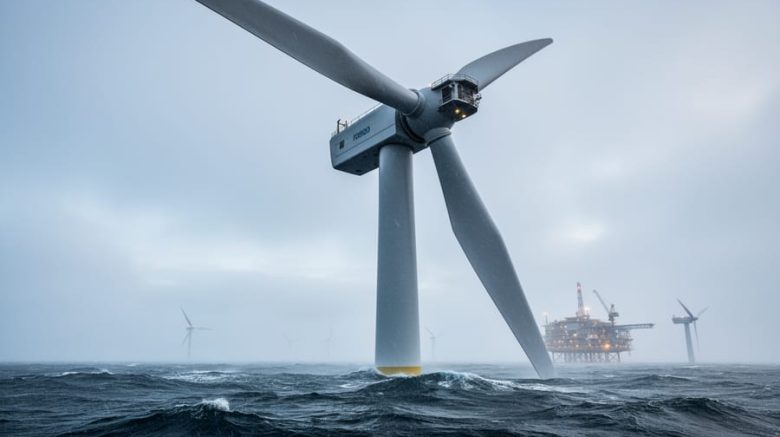
The world’s largest wind turbines tower over 850 feet tall and generate enough electricity to power more than 20,000 homes from a single machine. These giants represent the cutting edge of renewable energy technology in 2026, with offshore models now routinely producing 15 to 18 megawatts of clean power each.
If you’re curious about how big wind turbines have become and why size matters so much, you’re not alone. The dramatic growth in turbine scale over the past decade has transformed what’s possible in renewable energy. Where a typical turbine from 2010 might have stood 300 feet tall with 2-megawatt capacity, today’s record-holders dwarf those machines by every measure.
The race to build bigger turbines isn’t just about bragging rights. Larger rotors capture exponentially more wind energy, and taller towers access stronger, more consistent winds at higher altitudes. A single 18-megawatt turbine can replace a dozen smaller units, requiring fewer foundations, less cabling, and dramatically lower maintenance costs per megawatt produced.
Offshore wind farms have particularly benefited from this supersizing trend. Companies like Vestas, GE Vernova, and Siemens Gamesa now manufacture turbines with rotor diameters exceeding 850 feet. That’s wider than three football fields laid end to end. When these massive blades sweep through the air 650 feet above the ocean surface, each rotation generates enough electricity to brew 1,500 cups of coffee.
Understanding these engineering marvels helps us grasp how quickly renewable energy has become both practical and powerful. What once seemed experimental is now standard practice in wind farm development worldwide, proving that clean energy solutions can scale to meet our growing electricity needs.
What Makes a Wind Turbine the ‘Largest’ in the World
When you hear about the “world’s largest wind turbines,” what exactly makes one turbine bigger or more powerful than another? The answer isn’t as simple as measuring height alone. Engineers and energy planners look at four key measurements, each revealing something different about a turbine’s capability.
Total height measures from the ground (or water surface) to the tip of a blade at its highest point. Modern offshore giants reach over 260 meters tall, that’s nearly three times the height of the Statue of Liberty. Taller turbines capture stronger, more consistent winds that blow at higher altitudes, especially over open ocean.
Rotor diameter is the full width of the circle swept by the spinning blades. A turbine with a 220-meter rotor diameter covers an area larger than four soccer fields. This swept area directly determines how much wind the turbine can capture. Double the rotor diameter, and you roughly quadruple the energy-collecting area, which is why manufacturers keep pushing this measurement higher.
Blade length is simply half the rotor diameter, measuring from the center hub to the blade tip. The longest blades operating offshore in 2026 exceed 115 meters each. Longer blades mean a bigger rotor, but they also create engineering challenges around weight, materials, and transportation.
Power capacitymeasured in megawatts, tells you how much electricity a turbine can generate under ideal conditions. The largest offshore turbines now reach 15 to 16 megawatts, enough to power roughly 12,000 homes per turbine. This number matters most for energy output, though it doesn’t always correlate directly with physical size.
Together, these measurements paint the full picture. A turbine might claim the “largest” title based on height, rotor diameter, or power capacity, and the record-holders in each category keep changing as technology advances. What matters is that bigger dimensions generally mean more clean energy captured from the same patch of ocean.
The Giants Currently Leading the Pack
How Big Is Big? Putting Size Into Perspective
Standing at the base of the world’s largest wind turbines, you’d crane your neck nearly 900 feet up, higher than the Eiffel Tower’s observation deck and taller than three Statues of Liberty stacked on top of each other. These offshore giants dwarf everything around them.
Each rotor blade sweeps a circle larger than the London Eye. One single blade stretches over 350 feet, longer than an American football field. When all three blades rotate together, they cover an area roughly the size of four soccer fields. You could park 18 Boeing 747s nose-to-tail across that spinning diameter.
To put the weight in perspective, each turbine’s nacelle, the house-sized box at the top holding the generator, weighs as much as 12 adult elephants. The total assembled structure tips the scales at over 600 tons, equivalent to about 400 cars.
Here’s what makes that size truly remarkable: one full rotation of those massive blades generates enough electricity to power an average home for two days. In one year, a single turbine produces enough clean energy for roughly 12,000 households.
These aren’t abstract engineering specs, they’re working machines you can see from shore in places like Scotland and Norway. When you watch one turn against the horizon, each slow, deliberate sweep of the blades marks real progress toward cleaner energy. That’s the scale we’re talking about when we discuss the world’s largest wind turbines.
Why Floating Wind Farms Need These Massive Turbines
Floating wind farms push farther offshore where the ocean floor drops beyond the reach of traditional fixed turbines, and that’s exactly where the strongest, most consistent winds blow. The world’s largest wind turbines aren’t just impressive feats of engineering, they’re the practical answer to harvesting energy in these remote, deep-water locations where smaller turbines simply wouldn’t make economic sense.
Out in open ocean, wind speeds average 20-30% higher than closer to shore, and they blow more steadily throughout the day and night. Larger turbines capture exponentially more of this energy because their massive rotors sweep a much greater area. A turbine with a 260-meter rotor diameter covers nearly twice the swept area of one with 180-meter blades, translating to roughly double the power output from the same wind resource. When you’re floating miles from shore in challenging conditions, you want each turbine working as hard as possible.
The economics become compelling when you consider installation costs. Transporting and anchoring a floating platform in deep water requires specialized vessels, underwater moorings, and complex logistics. These expenses don’t scale linearly with turbine size, installing one 15-megawatt turbine costs far less than installing three 5-megawatt units to generate the same power. Fewer platforms mean fewer moorings, less underwater cabling, and dramatically lower maintenance requirements over the project’s 25-year lifespan.
This efficiency extends to the ocean environment itself. Marine ecosystems adapt better to a smaller number of larger installations than to forests of smaller turbines scattered across wider areas. Fewer floating structures mean less disruption to shipping lanes, fishing grounds, and migratory routes for marine life. The world’s largest turbines let developers concentrate infrastructure in carefully chosen locations while leaving more ocean undisturbed.
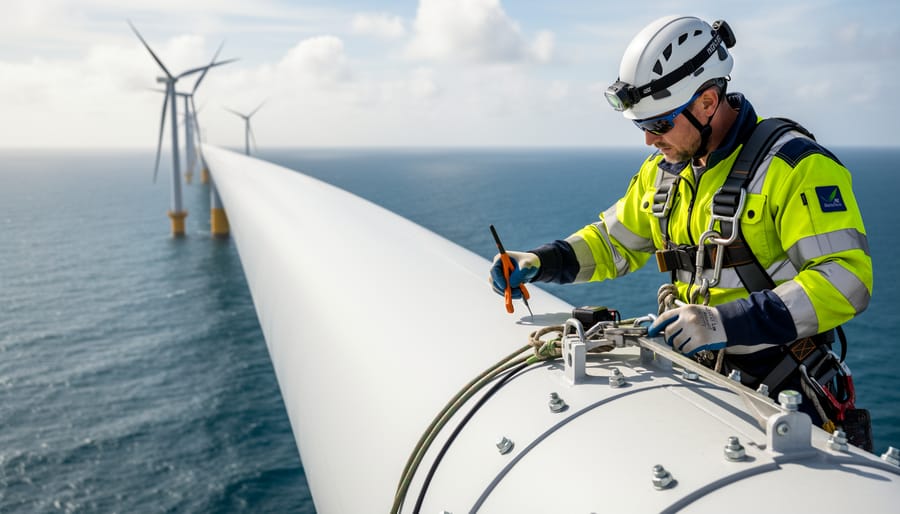
Maintenance crews face brutal conditions servicing offshore equipment, and every trip costs thousands of dollars in vessel time and labor. Larger turbines generate more power per maintenance visit, improving the ratio of energy produced to human hours spent in dangerous offshore work. They also incorporate more sophisticated monitoring systems that predict failures before they happen, reducing emergency repairs.
The bottom line is simple: when you’re building in some of Earth’s harshest environments, bigger isn’t just better, it’s essential for making floating wind farms practical and affordable enough to contribute meaningfully to clean energy goals.
How Floating Technology Works (Without the Engineering Jargon)
Picture a buoy bobbing on the water, staying upright no matter how the waves move. Floating wind turbines use the same basic principle, just on a massive scale. Instead of being hammered into the seabed like their fixed-bottom cousins, these turbines rest on floating platforms anchored to the ocean floor with cables. The platforms are engineered to handle the constant motion of the sea while keeping the turbine stable enough to generate power efficiently.
Three main platform designs dominate floating wind technology. Semi-submersible platforms look like giant pontoons partially submerged beneath the surface, using buoyancy and ballast to stay level. Spar buoys resemble massive underwater pencils extending deep below the waves, relying on a low center of gravity for stability. Tension-leg platforms combine buoyancy with taut vertical cables that hold the structure firmly in position. Each design has trade-offs in cost, stability, and ease of installation, but all achieve the same goal: keeping those enormous turbines upright in open water.
This floating approach unlocks an enormous advantage. Fixed-bottom turbines work well in shallow coastal waters up to about 200 feet deep, but beyond that, the engineering becomes prohibitively expensive. Floating platforms can operate in waters exceeding 3,000 feet deep, opening up vast stretches of ocean previously off-limits to wind energy development. Many of the windiest, most productive areas lie far offshore in deep water, where the world’s largest turbines can capture consistent, powerful ocean breezes without competing for limited shallow-water sites.
The technology also reduces environmental disruption. Instead of driving massive foundations into the seabed and disturbing marine habitats, floating turbines can be fully assembled onshore or at port, towed to location, and anchored with minimal seafloor impact. When a turbine reaches the end of its lifespan, the entire structure can be disconnected and towed back for maintenance or decommissioning.
For countries with steep coastal shelves and limited shallow waters, floating technology represents the difference between modest offshore wind capacity and genuinely transformative clean energy potential. It turns deep ocean wind from an inaccessible resource into a practical power source.
Real-World Success: The World’s Largest Floating Wind Farm in Action
Off the coast of Scotland, the Hywind Tampen project has been quietly demonstrating what’s possible when you combine the world’s largest turbines with floating technology. This isn’t a pilot experiment, it’s a full-scale operation powering oil and gas platforms with clean energy, a twist that few saw coming when floating wind was still mostly theory.
The numbers tell part of the story: eleven turbines generating 88 megawatts of electricity, enough to meet about 35% of the annual power demand for five offshore platforms. That translates to roughly 200,000 tonnes of CO2 avoided each year. But the real revelation has been reliability. These massive floating turbines have operated in some of the North Sea’s harshest conditions, waves over 20 meters high, wind speeds exceeding 100 km/h, and kept producing power with uptime rates above 95%.
We expected challenges in the first year, but what we’ve seen is these turbines handling severe weather better than our fixed-bottom installations in milder conditions.
The impact ripples outward from the turbines themselves. Peterhead, the Scottish port town that became the operations hub, has seen job creation beyond the construction phase, technicians, marine coordinators, logistics specialists. Local suppliers won contracts for routine maintenance and monitoring. One boat operator shifted from supporting traditional offshore oil work to servicing the wind farm, training his crew in new skills while keeping his business viable.
Energy production exceeded initial projections by nearly 10% in the first operational year, largely because the floating platforms can access wind resources unavailable to fixed turbines. The deeper water 100 kilometers offshore means stronger, more consistent winds. Unlike coastal projects, there are no noise complaints, no visual impact debates, no conflicts with residential areas.
The lessons learned here are shaping future projects worldwide. Engineers discovered that the gentle rocking motion of floating platforms actually reduces mechanical stress on turbine components compared to fixed structures that absorb the full force of wind and waves. Maintenance crews developed new protocols for working on moving platforms. Insurance companies adjusted their risk models upward, in a good way, after seeing performance data.
Perhaps most important, the project proved that renewable energy can replace fossil fuel consumption in heavy industry, not just residential power. The oil platforms using this electricity have slashed their operational emissions without compromising production. That’s a template other sectors are now studying closely.
What This Means for Your Energy Future
The world’s largest wind turbines floating offshore aren’t just engineering achievements, they’re reshaping how we power our homes, businesses, and communities. As these massive turbines come online, they’re creating tangible benefits you’ll see in your daily life, from the reliability of your electricity to the cost of your monthly bill.
First, let’s talk about energy prices. Large-scale floating wind farms generate electricity at a lower cost per megawatt than smaller installations because each turbine produces so much more power. As these projects scale up, they’re driving down renewable energy costs across the grid. Many regions with floating wind farms are already seeing decreased reliance on fossil fuels, which means less exposure to volatile oil and gas prices. Your energy costs become more predictable and, in many cases, lower over time.
Grid reliability improves too. Unlike solar panels that only work when the sun shines, offshore wind turbines capture consistent ocean breezes day and night. The world’s largest turbines can each power thousands of homes continuously, creating a stable renewable baseload that reduces blackout risks and strengthens energy security for entire regions.
For carbon reduction, the numbers are striking. A single large floating turbine can offset tens of thousands of tons of CO2 annually, equivalent to taking thousands of cars off the road. As more of these giants appear offshore, they’re accelerating the clean energy transition and helping communities meet climate goals without requiring massive lifestyle changes from residents.
Perhaps most encouraging, this infrastructure creates local opportunities. Floating wind farms need maintenance crews, port facilities, and manufacturing hubs. Coastal communities are seeing new jobs and economic investment that stays in the region. You’re not just witnessing a shift to renewable energy, you’re part of a growing sector that combines environmental progress with economic vitality, proving that sustainable choices and prosperity go hand in hand.
Small Actions You Can Take to Support Wind Energy
You’ve learned how the world’s largest wind turbines are transforming renewable energy through floating offshore technology. Now let’s talk about what you can do to support this transition. You don’t need to install a turbine in your backyard or become an engineer, small, deliberate actions add up when thousands of people take them.
Here are concrete steps you can take today:
- Switch to a green energy plan with your utility provider. Many companies now offer plans powered by wind and other renewables, often at competitive rates. Check your current provider’s options or search for renewable energy suppliers in your area.
- Reduce your overall energy consumption. The cleanest energy is the energy you don’t use. Simple changes like LED bulbs, unplugging devices, and adjusting your thermostat by just two degrees can cut your household energy use by 10-15%.
- Advocate for renewable projects in your community. Attend local planning meetings, write to your representatives, or sign petitions supporting wind farm development. Your voice matters when projects face regulatory approval.
- Invest in renewable energy if you’re able. Community solar programs, green bonds, or renewable energy stocks allow you to financially support the industry while potentially earning returns.
- Share what you’ve learned. Talk to friends and family about how massive wind turbines are making clean energy practical and affordable. Conversations shift perspectives.
- Support businesses committed to renewable energy. Companies purchasing wind power for their operations drive demand that makes projects like floating wind farms economically viable. Your purchasing choices send signals.
The transition to wind energy isn’t just about massive turbines spinning offshore, it’s about millions of people making informed choices. When you reduce consumption, choose renewable sources, or speak up for clean energy projects, you’re directly supporting the infrastructure that makes those giant turbines economically feasible. Your utility company notices when customers request green plans. Developers gain confidence when communities show support. The market responds to demand you help create.
The world’s largest wind turbines now floating on our oceans aren’t just impressive feats of engineering. They’re proof that clean energy technology has reached a turning point. These towering structures, some taller than the Eiffel Tower with blades sweeping areas larger than football fields, generate enough power to supply thousands of homes from a single turbine.
Floating wind technology has unlocked ocean spaces we couldn’t tap before, placing these giants where winds blow strongest and most consistently. The numbers speak for themselves: projects already operational are delivering reliable renewable energy to coastal communities, and dozens more installations are planned for the coming years.
What makes this moment different is scale. We’ve moved beyond experimental prototypes to commercial wind farms that compete with traditional power plants on cost and reliability. Each new project built proves the technology works, drives down costs for the next installation, and accelerates the shift away from fossil fuels.
You’re part of this transition whether you realize it or not. Every time you choose renewable energy, reduce consumption, or support policies that favor clean power, you’re contributing to momentum that makes projects like these possible. The world’s largest wind turbines floating offshore today started as ideas that people believed in and fought for.
The future of energy is being written right now, on the open ocean, and it’s getting cleaner every day.